How to Start a Food Business in India: FSSAI License, GST, and Other Registrations
Jun 1st 2026 • 5 min read
Entering the Indian food industry in 2026 is an exciting venture. Whether you are opening a cloud kitchen, a fine-dine restaurant, or a packaged food brand, legal compliance is your first ingredient for success.
1. FSSAI License: The Non-Negotiable Start
Every Food Business Operator (FBO) must register with the Food Safety and Standards Authority of India (FSSAI). Your license type depends on your annual turnover:
- Basic Registration: Turnover ≤ ₹1.5 crore.
- State License: Turnover ₹1.5 crore - ₹50 crore (State License).
- Central License: Turnover > ₹50 crore, or involved in import/export and large-scale manufacturing.
* Important: FSSAI regulations require the 14-digit FSSAI license/registration number to be printed on food packaging labels (for packaged foods).
UPDATE April 2026:
- FSSAI licenses and registrations have PERPETUAL VALIDITY (forever, unless suspended/cancelled/surrendered) — no annual renewal needed. However, you must still pay annual fees and file annual FSCR returns.
- FSSAI Registration limit increased from ₹12 lakh to ₹1.5 crore/year (12x increase). Home bakers, tiffin services, cloud kitchens, and small food businesses with turnover up to ₹1.5 crore now need FSSAI Registration (not a State License) — much simpler, cheaper, and no renewal needed!
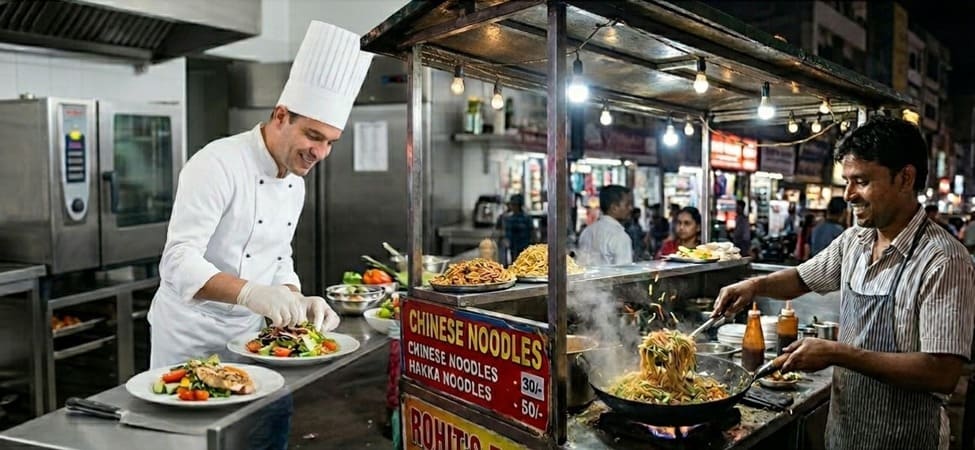
- Street vendors registered under the Street Vendors (Protection of Livelihood) Act 2014 are now automatically deemed registered under FSSAI. No separate FSSAI registration or duplicate fees required (saves 10+ lakh vendors nationwide).
- Small businesses (turnover < ₹1.5 crore) can now get instant FSSAI registration certificate upon document submission — no mandatory pre-inspection required.
2. GST Registration for Food Businesses
GST is mandatory if your turnover exceeds ₹20 lakh (₹10 lakh for special states). However, if you sell food via e-commerce platforms (like Swiggy, Zomato, Amazon Food, etc.), you must register regardless of turnover (₹0 threshold for online food sales) per GST rules.
- Most food items: 5% GST.
- Standalone Restaurants: 5% (without ITC).
- Restaurants in Premium Hotels (>₹7500 tariff): 18% (with ITC).
3. Other Essential Registrations
To operate legally and safely, you will need:
- Business Entity: Register as a Proprietorship, LLP, or Private Limited.
- Udyam (MSME): Registration for loan benefits and payment protection.
- Trade & Health Licenses: Obtained from your local Municipal Corporation and Health Department.
- Fire Safety: Required for outlets with seating capacity.
Ongoing Compliance
Stay operational by managing your recurring filings and training requirements:
- FSSAI Annual Return: Manufacturers and importers must submit Form D-1 by May 31 every year.
- FoSTaC Training: State and Central license holders must have at least one trained Food Safety Supervisor for every 20 food handling staff.
- Accessibility QR Codes: FSSAI now encourages the use of QR codes on food labels to provide nutritional information for visually impaired consumers.
- GST Returns: Regular GSTR-1 and GSTR-3B filings.
- Audit Records: Maintain hygiene audits, pest control records, and water test reports.
Planning to start a food business?
Get all registrations done in one day. Consult Our Experts today.
